
Transthyretin Cardiac Amyloidosis
Index of suspicion ATTR-CM
History
Cardiac manifestations
Fatigue
Heart failure symptoms
Severe AS
Family Hx of heart failure
Conduction system disease/pacemaker
Atrial fibrillation
Extracardiac manifestations
Bilateral carpal tunnel syndrome
Lumbar/cervical spinal stenosis
Spontaneous biceps tendon rupture
Hip or knee replacement
Sensory peripheral neuropathy
Family history of neuropathy
Autonomic dysfunction
AL-amyloid
Extracardiac manifestations
-
Renal dysfunction, proteinuria
-
Carpal tunnel
-
Hepatic dysfunction
-
Orthostatic hypotension
-
Peripheral neuropathy
-
Gastrointestinal abnormalities
-
Hypothyroidism
-
Macroglossia
-
Periorbital purpura
Laboratory test results
Persistent low levels of troponin elevation
Elevated natriuretic peptides
ECG
Low voltage to LV mass ratio
(low QRS voltage on electrocardiogram (ECG) is not sensitive and only observed in 25% to 40% of cases of ATTR-CM.)
Atrial fibrillation/flutter, especially with controlled ventricular response
Conduction delay (atrioventricular block ± intraventricular conduction delay)
Pseudoinfarct pattern

Low voltage in relation to LV wall thickness.
Echocardiography
2-Dimensional imaging
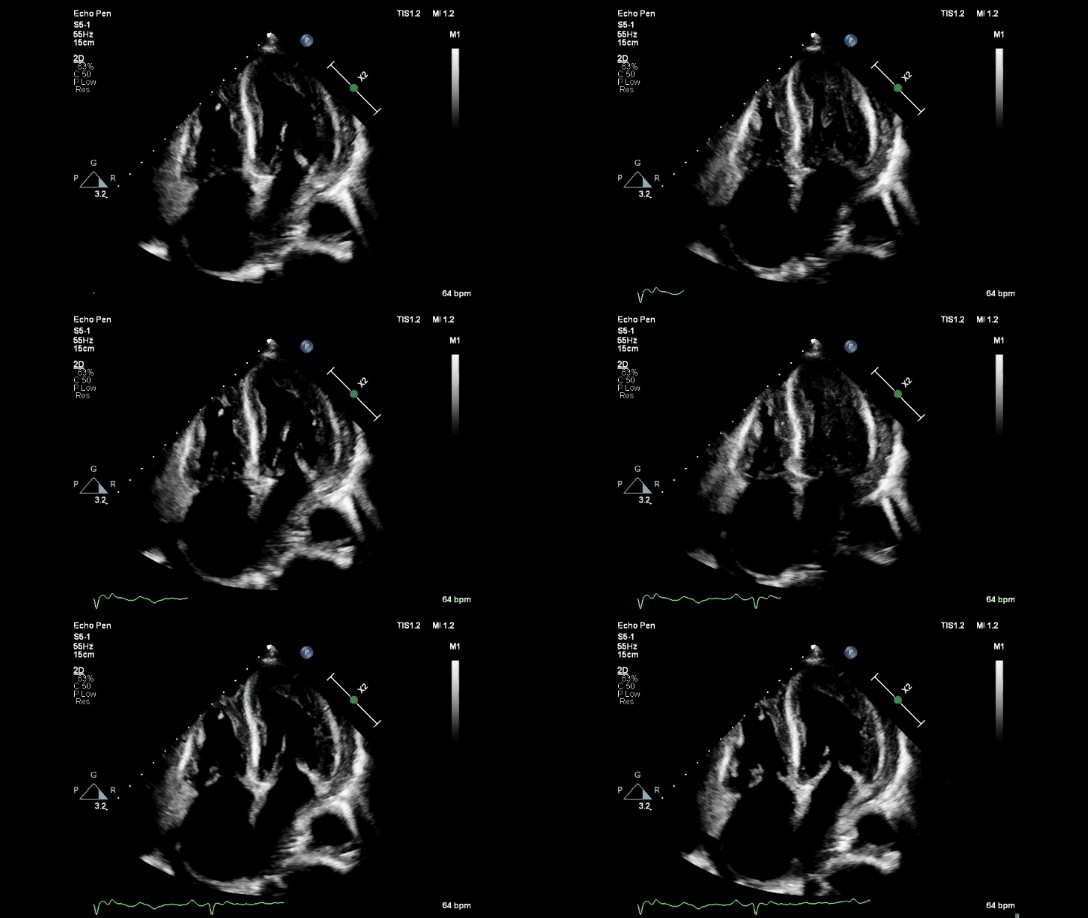
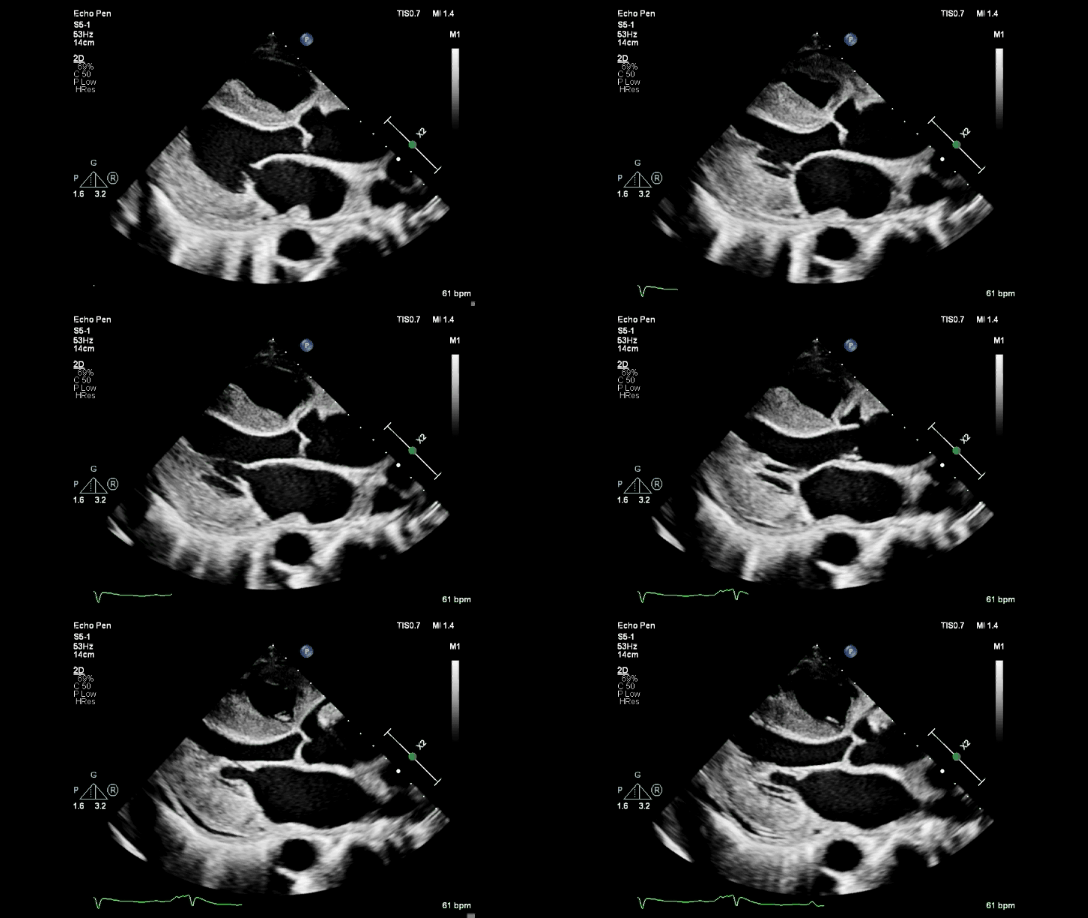
Increased LV and RV wall thickness
Interatrial septal and diffuse valve thickening
RV hypertrophy
Pericardial effusion
Biatrial enlargement and dysfunction
Preserved EF with low stroke volume index
Doppler
Reduced tissue Doppler s’, e’, and a’ velocities
Restrictive transmitral Doppler filling pattern
Diastolic dysfunction grade 2 with high E/A ratio (> 1.5) and reduced E deceleration time (< 150 ms)
Reduced TAPSE

'5-5-5 sign': systolic (s'), early diastolic (e'), and atrial diastolic (a') velocities are all <5 cm/s.
Diastolic dysfunction at least gr 2 (E/e' >15)
Atrial enlargement
LV wall thickness
RV wall thickening
Sparkling texture of myocardium
Small pericardium
effusion

Reduce TAPSE
Other
Reduced global longitudinal strain; ratio between EF and global longitudinal strain
EF to GLS ratio: (EFSR = EF/|GLS|)
Apical sparing on 2-dimensional speckle tracking images (classically referred to as “cherry on top”)
Low flow, low-gradient severe aortic stenosis
Impaired left atrial strain
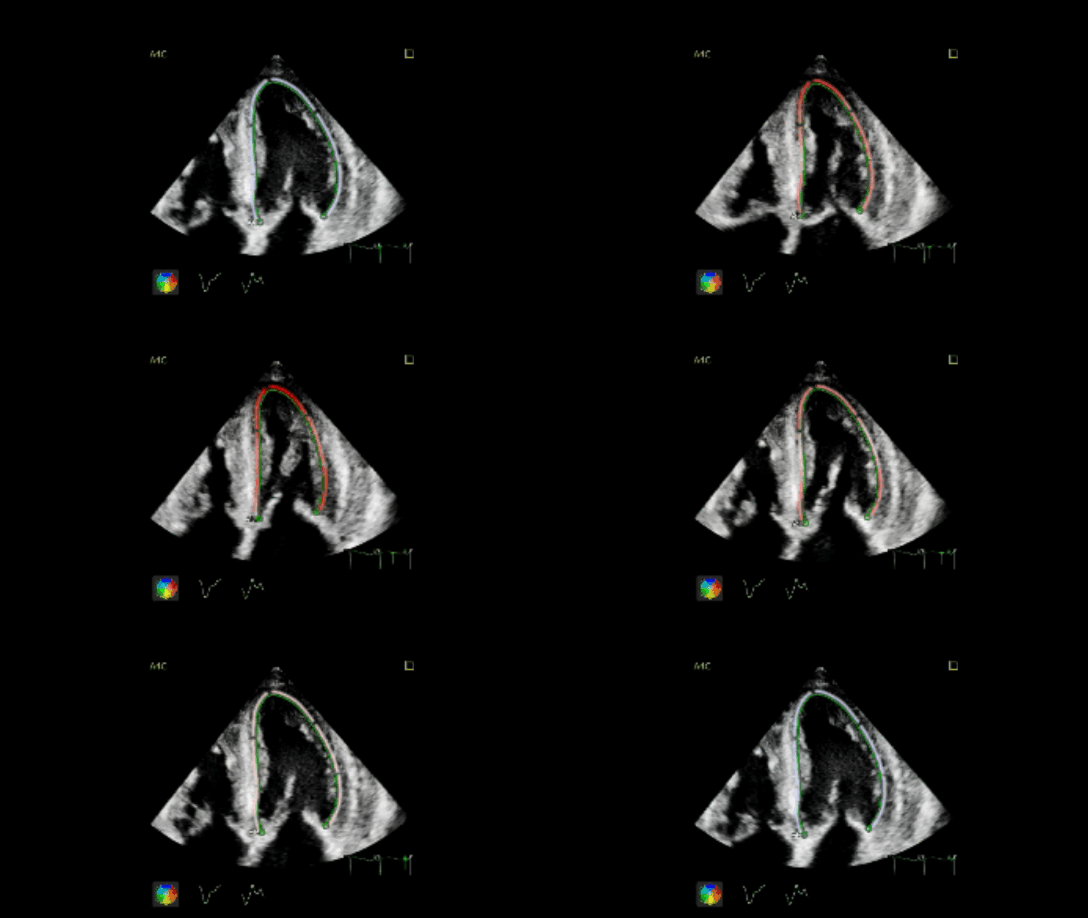
Modified Simpson's method (or biplane method of disks) = 60%

Reduced GLS with apical sparing
GLS average = -11.4%
EFSR = EF / |GLS|
= 60 / |-11.4|
= 5.26
An optimal cutoff value (Youden index) of EFSR ≥ 4.1 to differentiate Cardiac amyloidosis from HCM.
Cardiac MRI
Diffuse subendocardial or transmural late gadolinium enhancement
Increased myocardial native T1
ECV expansion (>40%)
Reversal of nulling (nulling of the myocardium before or at the same inversion time as blood pool)
Diagnostic Algorithm for Cardiac Amyloidosis
History, ECG, and imaging suggestive of cardiac amyloidosis.
Evidence of monoclonal protein
-
Monoclonal protein in serum/urine IFE
-
Abnormal serum kappa/lambda free light chain depends on eGFR (See below)
-
SPEP/UPEP not as sensitive as IFE
Positive
Negative
Consult Hematologist
Biopsy (affected organ, surrogate site)
-
Positive Congo Red
-
Tissue typing by mass spectrometry
AL-CM or
ATTR-CM with MGUS
Radionuclide scintigraphy (with SPECT)
• Grade 2/3 uptake
Yes
ATTR-CM
No
Cardiac amyloid is unlikely
Genetic testing
ATTRv-CM
ATTRwt-CM
Biopsy sensitivity
Reference K/L ratio (depends on eGFR)
Amyloid Type | Fat pad sensitivity | Bone marrow sensitivity |
|---|---|---|
AL | 73-84% | 60% |
ATTRv | 45-67% | 41-47% |
ATTRwt | 14-16% | 30-38% |
eGFR | Free light chain ratio range |
|---|---|
45-59 | 0.46-2.62 |
30-44 | 0.48-3.38 |
15-29 | 0.54-3.30 |
<15 | 0.54-3.30 |
Genotype–phenotype correlation in ATTR amyloidosis.

V30M Early-Onset
V28M
G54G
I107P
S77Y
L58H
F33L
E39L
C10R
S50R
R34T
G47A
F64L
A36P
T49A
A97S
V30M Late-Onset
P24S
E89Q
I107V
W41L
T60A
H88R
V20I
A45T
G65L
S23N
I84A
I68L
L111M
V122I
ATTR Wide Type
FDA approved disease-modifying therapies for ATTR-CM
Tafamidis | Acoramidis | Vutrisiran | |
|---|---|---|---|
Mechanism of action | Transthyretin stabilzer at T4 binding site | Transthyretin stabilzer at T4 binding site | siRNA TTR gene silencer |
Landmark trial | ATTR-ACT | ATTRIbute-CM | HELIOS-B |
Study design | RCT versus placebo phase 3 | RCT versus placebo phase 3 | RCT versuss placebo phase 3 |
Study dose | 20 mg or 80 mg orally OD | 800 mg orally twice a day | 25 mg subcutaneous every 3 mo |
FDA-approved dose | tafamidis 61 mg or | 712 mg twice daily | 25 mg subcutaneous every 3 mo |
tafamidis meglumine 80 mg | in a healthcare setting | ||
No. of participants | 441 | 632 | 654 |
Mean age, year | 74 | 77 | 77 |
Male, % | 90 | 90 | 93 |
ATTRwt/ATTRv | 76%/24% | 90%/10% | 88%/12% |
NYHA class (I/II/III) | 8/60/32 | 11/72/17 | 13/78/9 |
Primary outcome | Death, CV hospitalizations win ratio: | Death, CV hospitalizations, NT-proBNP | Death, CV events: |
1.7 (95%CI, 1.3-2.3) | change, 6MWT change win ratio: | HR: 0.72 (95%CI: 0.56-0.93) | |
1.8 (95%CI, 1.4-2.2) | |||
Vitamin A supplement | Not required | Not required | Vitamin A supplement (local RDA) |
Diflunisal (TTR stablizer)
FDA approved as NSAID, Off-label use in ATTRwt or ATTRv with cardiomyopathy or neuropathy
Dose: 250 mg orally twice daily with PPI
Clinical trial: Diflunisal trial Consortium
Inclusion:
ATTRv with sensorimotor polyneuropathy (familial amyloid polyneuropathy)
Biopsy-proven amyloid deposit
Confirm TTR mutation
Exclusion
NYHA class IV
CrCl < 30 ml/min
Anticoagulation
Adverse effect: Fluid retention, Renal dysfunction, Bleeding
Monitoring: Renal function, platelet count, Hemoglobin
Patisiran (TTR Silencer)
FDA approved: ATTRv with neuropathy
Off-label use in ATTRwt or ATTRv with cardiomyopathy or neuropathy
Dose: 0.3 mg/kg intravenously every 3 wk, Premedication with corticosteroids, H1 blocker, H2 blocker, Daily vitamin A supplement
Clinical trial: Apollo Trial
Inclusion:
Documented TTR mutation
Confirmed ATTRv with polyneuropathy
NIS score 5-130
PND score <=3b
Exclusion
NYHA class III-IV
Liver transplantation
Adverse effect: Infusion-related reaction, Vitamin A deficiency
Monitoring: None
Inotersen (TTR silencer)
FDA approved: ATTRv with neuropathy
Dose: 284 mg/wk subcutaneously, Daily vitamin A supplement
Clinical trial: NEURO-TTR
Inclusion:
ATTRv with polyneuropathy stage 1 and 2
NIS 10 - 130
Documented TTR mutation
Documented amyloid deposit on biopsy
Exclusion
Platelets <125 x 10^9/L
CrCl < 60 ml/min 1.73 m2
NYHA class III symptom
Liver transplantation
Adverse effect: Thrombocytopenia, Glomerulonephritis, Infusion-related reaction, Vitamin A deficiency
Monitoring: Weekly platelet count, every 2 wk, serum creatinine, eGFR, UPCR
Reference
1) Writing Committee; Kittleson MM, Ambardekar AV, Cheng RK, Griffin JM, Maurer MS, Nativi-Nicolau J, Ruberg FL. Transthyretin Cardiac Amyloidosis Evaluation and Management: 2025 ACC Concise Clinical Guidance. J Am Coll Cardiol. 2026 Feb 10;87(5):549-565. doi: 10.1016/j.jacc.2025.09.004. Epub 2025 Oct 31. PMID: 41171219.
2) Poli L, Labella B, Cotti Piccinelli S, Caria F, Risi B, Damioli S, Padovani A and Filosto M (2023) Hereditary transthyretin amyloidosis: a comprehensive review with a focus on peripheral neuropathy. Front. Neurol. 14:1242815. doi: 10.3389/fneur.2023.1242815
3) Pagourelias, E, Duchenne, J, Mirea, O. et al. The Relation of Ejection Fraction and Global Longitudinal Strain in Amyloidosis: Implications for Differential Diagnosis. J Am Coll Cardiol Img. 2016 Nov, 9 (11) 1358–1359.
4) Sarah A.M. Cuddy, MD; Michael Chetrit, MD; Madeline Jankowski, BS, RDCS, ACS, FASE; Milind Desai, MD, MBA; Rodney H. Falk, MD; Rory B. Weiner, MD, FASE; Allan L. Klein, MD, FASE; Dermot Phelan, MD, PhD, FASE; Martha Grogan, MD. Practical Points for Echocardiography in Cardiac Amyloidosis. JASE 2022; 35(9): A31-A40.
.